
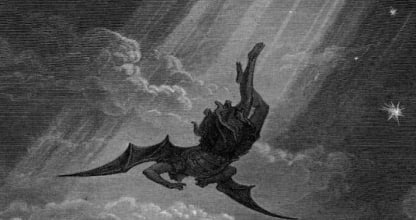
mixed up
a personal essay on what makes a home. not quite a horror piece, but a reason why I've always felt like a monster.

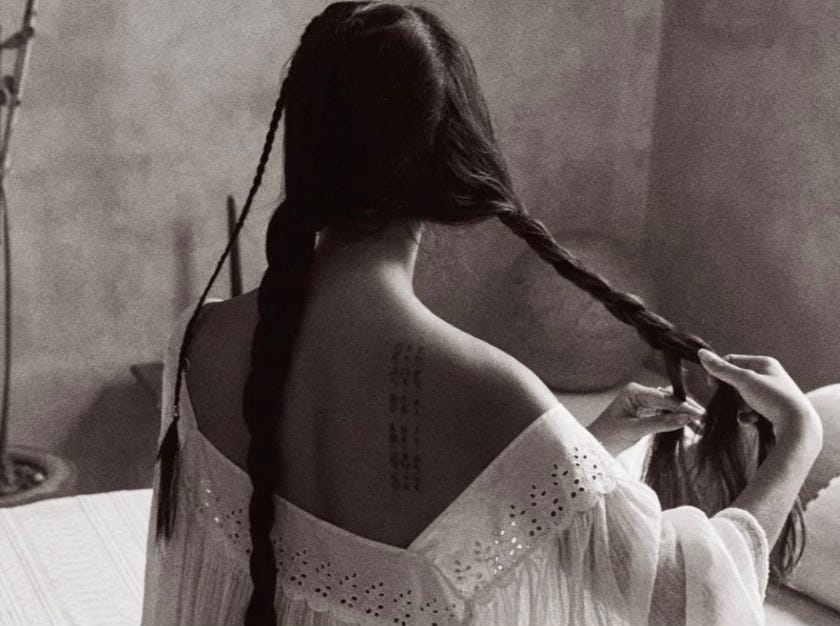
When you grow up mixed, I guess that makes all your stuff mixed too. Every item that I own carries its own lineage, mirroring the way I carry mine. Half Arab, Half Indian.
(Not the right kind of half, not a half that deems respect, but that depends on who you are talking to. But, it is the only half that can fill the part to make a whole)
I lounge in my bed, in a place that I now call home. It’s my current home. But my old home, the home I attached my childhood too, was in Riffa. My first home, the one I carry very blurry memories of, was in Arad. But if anyone asks where my family were brought up, I say Muharraq. But I never lived there.
(I guess I slowly made my way down the island of Bahrain over time. As close as I can get to the desert. As close as I can get to seeing the sea from a distance)
But I’m all mixed up - me, my life and my stuff. When you enter my home, you see how it all collides in color, clutter and chaos. But my room is my sanctuary, my quiet space. A space that only an only daughter can curate for herself. To my left are a pair of binoculars which belonged to my grandmother. I picked them up from Tubli, which is where she lived. I would stop by often for lunch afterschool, the scent of fresh roti and curry lingering on my nose. But this place wasn’t her first home. She used to live in an apartment in Manama. And before that, she was in India.
(Not the India we know today, the one which is now divided by borders. I guess you can say she lived in modern day Pakistan)
I have no idea what her home looked like, her childhood home. But I spent my childhood here in Tubli. She used her binoculars to read (though I could be wrong). My only memory of her reading anything was during the Diwali prayer, and even then, she used a magnifying glass, not binoculars.
(I’m mixed up again)
When I was a teenager, I tucked the binoculars in my bag from one of her drawers after she passed away, because I needed something tangible to hold onto since she wasn’t around. I knew I wouldn’t get anything else. But her binoculars are mine. I don’t know where she purchased them from. I don’t know where its home is.
When you grow up mixed, you grow up questioning everything. Faith, language, society. I felt pulled apart for a while. So much western influence from a child with no western lineage. In my room to my right, I see an array of color, an assortment of dried flowers that bloom which hasn’t decayed. Flowers that aren’t native to my land. Flowers shipped in from all over the world. Broomsticks are not a part of my folk stories, but I received one on my 30th birthday.
At the time, I was so aware of how full my cup was, standing in a room full of everyone I love. Their homes are so different from mine. Their languages, their cultures, their smiles, their glorious, radiant lights.
(I guess when you’re all mixed up, it makes sense that the people in your life are mixed up too)
I wrote a poem ages ago where I said “I don’t speak my mother’s tongue or my father’s”. I never learned my mother’s language and I stutter when I speak my father’s. But I was taught English, and was told from an early age that I excel in this subject. My teacher was Canadian, fair skinned and freckled with a sweet smile, who somehow found her way to Isa Town. She told my mother that I am an advanced reader, and so my mother fed me books in English. It’s hard to swirl three languages on your tongue, especially since the common one at home is the one I excelled in.
(But I built a monster of my own through my bookshelf. Something to match me. It’s a singular body, every cell with a story, and here are a couple that stand out)
There’s a copy of The Hobbit that my mom read in Elementary school. She went to a British school, also located in Isa Town. A copy of one of Virginia Woolf’s works that belonged to my cousin which traveled from that same house in Tubli, all the way onto my bookshelf. We used to read together before the diagnosis. Before reality cut through imagination. I kept one book as a keepsake, and the rest were donated to another shelf in Saar. There’s a vintage book from 1930, I picked it up on a random street in London. It illustrates the Rubaiyats of Omar Khayaam.
(I had a lot of family members study under the British curriculum (from my mom’s side). I guess thats what happens when you have been occupied or colonized, depends which half you’re looking at. Not me though, I didn’t study under that curriculum. Once again, I’m all mixed up)
I look at my books. To read works from these authors from all sorts of mixed up backgrounds, I realize that if everything existed in separate lines, then my bookshelf wouldn’t have come to life.
To be honest, I don’t really fit in on either side of my background. I’m always slightly off. But there is a place where I always have a seat at the table. My desk, manufactured in Sweden, sold in a massive IKEA store that is now built over a land that was once a camel farm.
(I loved seeing the camels every morning. I don’t know where they are now)
But my desk is where I write. Where I draw. It’s very sacred to me. It holds my journal when I need something else to carry the burden. It holds my ideas as my imagination runs wild, translated through art or words. It holds my mess when I cannot take care of myself in the process. My desk itself is minimal and an interesting shade of blue. It stands out in my room of beige and white. It reminds me to add more color.
(Personally, I would prefer another color for my desk of choice. But I also know how it feels to stick out like a sore thumb. I think I will keep my desk as is)
When you’re all mixed up in language, ethnicity, culture and beliefs, you see everything a little differently. My room can tell you many stories, but you aren’t privy to that information without my permission. Faith has always been a tricky subject, especially when you deal with god-fearing teachers as a child. They will instill all the guilt in you to ensure you follow the righteous path. But that path doesn’t invite those of us who are mixed up.
One grandmother recites the Quran, the other tended to her altar with her sacred idols. And in my room, there is an altar with tarot decks, and there is a golden Buddha on a shelf. He resided in my old home in Riffa, placed in the family office on top of my grandfather’s old desk.
(Neither side of my family are practicing Buddhists. But the statue was golden, so I thought he was treasure. I would rub his belly for luck)
In my house where I currently live, he sits on my shelf. Next to an assortment of things that I have collected or have been gifted. The trinkets, new and old, is a timeline. But I often wonder if the Buddha remembers where he came from, or if he started feeling a little mixed up too.
Note: I wrote this piece during a writing session with our local writing group. Our host gave us prompts where we were exploring objects and space, in relation to what makes our home a home. This is probably my most personal piece I have written. The landmarks of this piece are all located in Bahrain, where I was born and raised, and where I currently reside.
I can’t even begin to explain how impactful this was to me, thank you for sharing your world ♥️
I remember I was in absolute rapture when you read this out to us. I can’t compare to your personal experience of dual lineage but I’ve always felt off despite the ‘oneness’ of mine.
You’re so beautiful, Lara — thank you for sharing this. 🙏🏻♥️